Children in Intensive Care E-Book, 3rd Edition
Children in Intensive Care fulfils a unique role in supporting clinical staff during the day-to-day management of the sick child. Presented in quick reference format, and in plain English, the book offers a unique guide to the wide variety of situations that a practitioner is likely to encounter during daily practice. Rich with reference tables, algorithms, artworks and ‘Alert’ boxes, the book offers a wealth of information which ranges from physiology to drug dosage calculation, drug compatibility lists, reference ranges, and X-ray interpretation. New chapters include oncologic emergencies, pain management and sedation, together with the latest information on the management of sepsis, the collapsed child, and care of the child following spinal surgery.
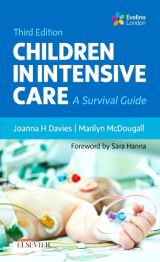
Children in Intensive Care fulfils a unique role in supporting clinical staff during the day-to-day management of the sick child. Presented in quick reference format, and in plain English, the book offers a unique guide to the wide variety of situations that a practitioner is likely to encounter during daily practice. Rich with reference tables, algorithms, artworks and ‘Alert’ boxes, the book offers a wealth of information which ranges from physiology to drug dosage calculation, drug compatibility lists, reference ranges, and X-ray interpretation. New chapters include oncologic emergencies, pain management and sedation, together with the latest information on the management of sepsis, the collapsed child, and care of the child following spinal surgery.
特長
- Information presented in quick reference format, with accompanying reference tables, to facilitate on-the-spot usage
- Advanced Life Support Group algorithms provide safe and easy-to-follow protocols to the management of emergency situations
- Contains input from a broad range of paediatric specialists – intensivists, anaesthetists, haematologists, oncologists, air ambulance physicians and retrieval nurses, pharmacists, specialist dieticians, and respiratory physiotherapists – to ensure full coverage and accuracy of information
- Contains helpful ‘Quick Guide’ and ‘Warning’ boxes to provide key information at a glance, while helpful mnemonics assist with learning
- Contains chapters on normal child development, safe-guarding children and young people, and patient transport
- Perfect for use on the wards, theatres, high-dependency units and intensive care units as well as during retrieval and A&E
- Ideal for newcomers and experienced staff alike, whether they be junior doctors or nursing staff
著者情報
| ISBN Number | 9780702067457 |
|---|---|
| Description Author List | By Joanna H. Davies, BSc (Hons) MSc RGN RSCN ENB 415, Paediatric Retrieval Nurse Practitioner, Paediatric Intensive Care and South Thames Retrieval Service, Evelina London Children’s Hospital, Guy’s and St Thomas’ NHS Foundation Trust, London, UK and Marilyn McDougall, MBChB (UCT, SA), DCH(SA), FCPaed (SA), MRCPCH, Paediatric Intensive Care and South Thames Retrieval Service Consultant, Honorary Clinical Senior Lecturer (Postgraduate teaching, Kings College London), Evelina London Children’s Hospital, Guy’s and St Thomas’ NHS Foundation Trust, London, UK |
| Copyright Year | 2018 |
| Edition Number | 3 |
| Format | E-Book |
| Imprint | Elsevier |
| Page Count | 0 |
| Publication Date | 29 Jun 2018 |
| Stock Status | IN STOCK |
1. All about resuscitation
Cardiopulmonary assessment, The initial approach to basic life support and life support algorithms, Early treatment of ventricular tachycardia, Intraosseous access, Use of the defibrillator, Shock, Useful mnemonics, Newborn resuscitation, Management of a blocked tracheostomy, Needle thoracocentesis, Management of anaphylaxis
2. Airway and breathing: Including common respiratory problems and blood gas interpretation
Upper respiratory tract, Lower respiratory tract, Pneumonia, Paediatric acute respiratory distress, Acid–base balance and interpretation of blood gases, Systematic review of chest X-ray, Means and methods of oxygen delivery, Intubation, Ventilation and definition of terms, Indications for assisted ventilation, Modes of ventilation, High-frequency ventilation, Capnography, Use of inhaled nitric oxide
3. Cardiac care
The normal heart, The normal electrocardiogram (ECG), Cardiac output, Invasive intravascular pressure monitoring, Top tips for post-operative cardiac management, Important post-operative problems, Removal of a left atrial line, Classification of congenital heart disease, Blocked BT shunt, Arrhythmias, ECMO
4. The kidneys and renal replacement
Key concepts, New biomarker, Acute kidney injury, Peritoneal dialysis (PD), Continuous veno-venous haemofiltration, Continuous veno-venous haemodiafiltration (CVVHD), Haemodialysis, Fluids for CVVH/CVVHD, Anticoagulation, Plasma exchange, Renal disease, Hypertensive crisis
5. Liver function and failure
The jaundiced baby, Biliary atresia, Acute liver failure, Portal hypertension, Sengstaken tube, Liver transplant Hepatorenal syndrome (HRS), Hepatopulmonary syndrome
6. Neurology – Assessment and management
Guidelines for neurological assessment, The cranial nerves, Identification and management of raised intracranial pressure, Intracranial Pressure monitoring, Common diagnostic tests, Diabetes insipidus, Seizures, Dystonia, Demyelinating conditions, Acute disseminated encephalitis (ADEM), Transverse myelitis, Myasthenia gravis, Meningitis, Posterior reversible, leukoencephalopathy syndrome (PRES)
7. Oncology emergency
Caring for an oncology patient in PICU – general principles, Central venous access, Chemotherapy – common side effects, Oncology emergencies, Oncology terminology, Specialist oncology drugs, Care of PICC line, Accessing a Port-A-Cath
8. Fluids and nutrition
Guidelines, Enteral feeding, Types of feeding and products available, Special diets for special kids, Total parenteral nutrition, Insensible loss, Burns
9. Blood and electrolytes: normal values, special tests and transfusion
Normal values: full blood count, Transfusion components, Major haemorrhage, Transfusion Compatibility, RhD Antigens, Special requirements – Irradiated, CMV or Hepatitis, E-negative irradiated blood products
10. Drugs – inotropes, vasodilators, sedatives, analgesics and muscle relaxants
Resuscitation drugs, Drugs for intubation, Quick reference guide for calculating infusions, Inotropic and chronotropic drugs, Drugs commonly used intravenous infusions, Therapeutic drug monitoring
11. Pain and sedation
Assessing pain and sedation, Treating children in pain, Red flags, Pain summary
12. Handy hints for various conditions
Sepsis, Necrotising fasciitis, Neonatal collapse, Sickle cell crisis, Diabetic ketoacidosis (DKA), Syndrome of inappropriate antidiuretic hormone secretion, Burns, Care of child post scoliosis surgery
13. Transport of critically ill infants and children – intra and inter-hospital transport
Transport team composition, Time critical transfer – Neurosurgical emergency and acute abdomen, Awaiting the paediatric critical care transport team – What can you do to help? Arrival of the paediatric critical care transport team, Before transfer, In transit, Looking after yourself, ABCDE Transfer guidance
14. Safeguarding children and young people
Safeguarding children policies and training, Types of child abuse, Looked after children (LAC), Female genital mutilation, Human trafficking, Conclusion
15. Death of a child
Expected death in PICU, Palliative care, The nurse’s role, The doctor’s role, Organ donation, Brain stem death diagnosis, Investigations that may be required prior to organ donation, Clinical management guidelines of the organ donor, Religion
16. Child development
Normal child development, Children’s developmental concepts of pain
17. Quick reference to syndromes
Abbreviations
The book scores 5 stars on Amazon
"I'm newly qualified, working in paediatric high dependency. Got this book a few weeks ago and now I have it with me every shift. It is pocket sized but doesn't miss out any information. Very easy to understand, so useful for someone newly qualified. I've looked at some of the other books on the market, and they are too in depth. I would definitely recommend this book for anyone working in PICU or PHDU.
This excellent little book will become a classic for all children's nurses caring for critically ill children. I randomly tested the content by looking up information in the index and was rewarded with a broad and up to date range of contents. The book will be especially useful to staff nurses new to the specialty where the book’s brevity, depth and transparency will come into its own. I have already recommended the book to many of my colleagues and loaned it to them for their opinion and comment. The feedback so far has been universally positive. The authors must be congratulated for their splendid book." --Jerry Masterson, RGN, RN (Child ) Dip Ch.
"Excellent pocket book which is written in an easy to follow style covering the essential points for anyone working with critically ill children.Very easy to follow sections with all the essential information immediately to hand."
"This book is great to have in your pocket at work so you can dip in and out when you want...it was my bible when I first went into PICU!!!"
"This is an excellent book. It is pocket sized so it is excellent to keep in your pocket whilst at work. It gives excellent explanations of all aspects of intensive care. It is easy to understand even for a beginner!"
"I recently started a job in PICU and was recommended this book as a useful guide. This book has helped me so much and I take it on every shift. Working with critically ill children can be overwhelming and the required knowledge is vast, this book is a fantastic aid in managing that knowledge and enabling you to help care for patients effectively."
"I also feel that this book would also help nurses caring for children in a non-intensive care setting."
"Wonderful book for a newly qualified nurse working on a PICU. Very easy to use and handy size to carry about. Highly recommended!"
"This book has some really useful information for everyday questions on PICU; it's easy to use and is suitable for all nurses in this setting - be it newly qualified or switching areas."
"Excellent pocket book which is written in an easy to follow style covering the essential points for anyone working with critically ill children. Very easy to follow sections with all the essential information immediately to hand."